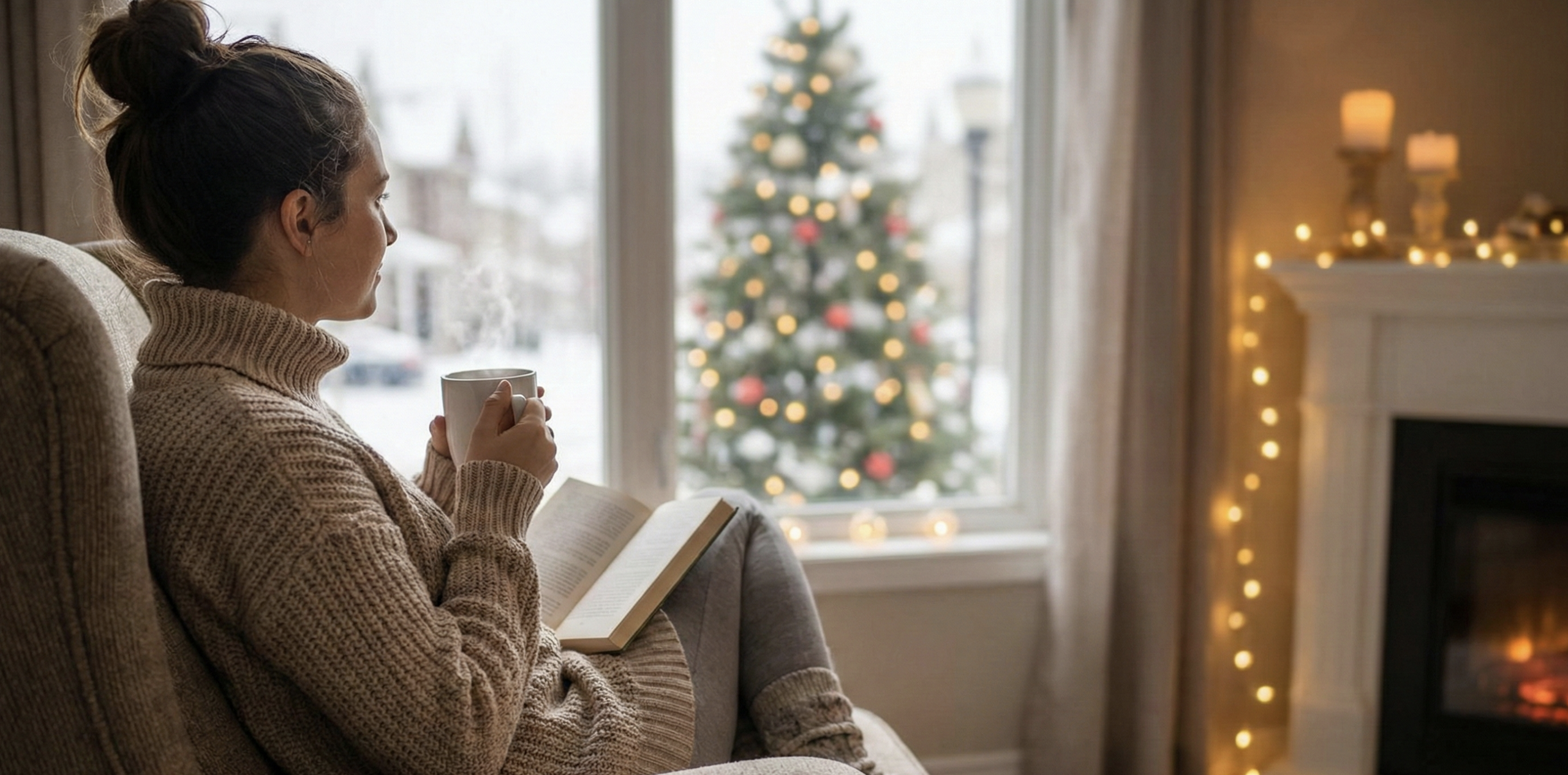

If you’re waking up solo this Christmas, you’re not the outlier you might think you are. In fact, you’re part of a large and growing demographic reshaping how Americans experience the holidays.
New survey data released this December suggests that as many as 14 million Americans may spend Christmas Day 2025 alone. The findings come from a new study conducted by AMFM Healthcare (A Mission for Michael), a mental health organization that analyzed how Americans who live alone are navigating the holiday season. The data highlights that “silent nights” are increasingly driven by economics, geography, and personal choice—not just isolation.
Why So Many Americans Are Spending Christmas Alone
The study surveyed more than 3,000 U.S. adults who live alone to better understand the shifting landscape of holiday celebrations. While popular culture often depicts Christmas as a time of crowded family gatherings, the reality for many Americans looks very different.
According to the survey results published by AMFM Healthcare, the most common reasons for spending the holiday alone include:
- Geographic distance (29%)
Many respondents reported living too far from family or friends to make holiday travel feasible. - Family dynamics (20%)
Ongoing family conflict or estrangement was cited as a key factor. - Economic pressure (17%)
Rising travel costs are forcing many single-income households to prioritize financial stability over expensive holiday traditions.
These findings align with broader trends showing how financial stress and mobility challenges are reshaping modern holiday behavior.
State-by-State: Where Christmas Is “Quietest”
AMFM also analyzed where solo Christmas celebrations are most prevalent across the United States, using population-adjusted estimates based on census data.
These rankings reflect population-adjusted prevalence, not total raw counts. Larger states may have more solo celebrators overall, while smaller states may have a higher proportion of residents spending the day alone.
States With the Highest Population-Weighted Rates of Solo Christmases
- Wisconsin
- Tennessee
- Louisiana
- Minnesota
- Maryland
In terms of total numbers, larger states still dominate. For example, California is estimated to have approximately 1.36 million residents spending Christmas alone, according to AMFM’s analysis using U.S. Census single-household data.
Rethinking the “Sad Single” Narrative
One of the most striking takeaways is how strongly the data challenges the assumption that spending Christmas alone is inherently tragic.
While 25% of respondents reported feeling lonely, many described their emotions as neutral or even positive:
- 16% said they actually prefer spending Christmas alone
- 40% reported having no fears about the day
- 37% described their feelings as indifferent
These findings echo previous research from institutions like The Ohio State University Wexner Medical Center, which has reported that many Americans view alone time as essential to their mental health—particularly during high-pressure seasons like the holidays.
How People Spending Christmas Alone Are Passing the Day
For many respondents, a solo Christmas looks less like isolation and more like intentional rest and self-care.
According to the AMFM survey:
- 28% plan to watch holiday movies or television
- 19% are treating themselves with special meals, gifts, or personal rituals
- 15% will connect virtually with loved ones
Rather than replicating traditional celebrations, many are redefining the holiday on their own terms.
What This Data Reveals About Modern Holidays
Spending Christmas alone does not automatically equal loneliness. For some, it reflects distance, economic reality, or complicated family relationships. For others, it’s a deliberate and emotionally neutral choice.
This shift mirrors broader trends identified by organizations such as the Organization for Economic Co-operation and Development (OECD), which has documented a long-term decline in in-person social interaction alongside rising economic pressures—factors that disproportionately affect people living alone.
As household structures continue to change and solo living becomes more common, the data suggests that solo holidays may increasingly become part of the American norm rather than an exception.
Methodology
Data cited in this article is based on a December 2025 survey of 3,001 U.S. adults who live alone, conducted by AMFM Healthcare (A Mission for Michael). The study used stratified sampling and post-stratification weightingto ensure national representation before extrapolating findings to the broader U.S. Census population of single-person households.
Sources:
- AMFM Healthcare (A Mission for Michael) holiday survey data
- U.S. Census Bureau data on single-person households
- OECD research on social isolation and economic stress
- Ohio State University Wexner Medical Center studies on alone time and mental health