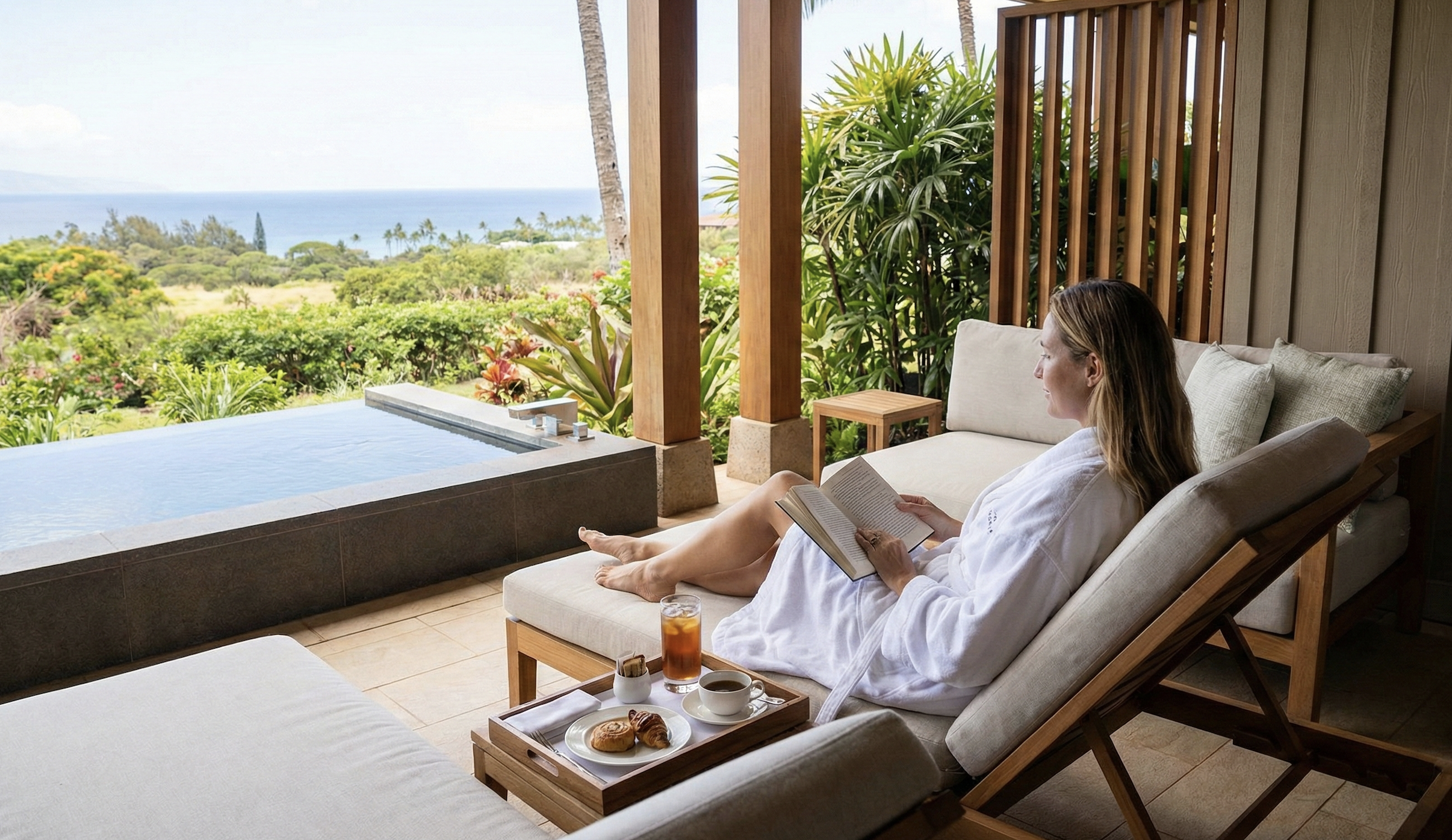

Luxury travel has long been engineered for couples and families. Honeymoons, anniversary packages, and the infamous “single supplement” reinforced the idea that solitude was a social error to be corrected. But a new wave of programming from Sensei Lanai, A Four Seasons Resort, suggests that solitude has crossed into the premium tier—and the industry is adjusting accordingly.
Rather than treating solo travel as an interim lifestyle between relationship milestones, the resort is acknowledging it as a deliberate mode of living. Their latest wellness offerings focus on structured solitude, burnout recovery, and high-performance health goals, rooted in guided consultations, private spa hale access, and evidence-based fitness programming.
Intentional Solitude Goes Premium
The hospitality shift mirrors a broader cultural one: single adults are no longer waiting for partners to book bucket-list trips, wellness retreats, or performance training. Autonomy has become its own luxury, and the market is validating that autonomy with product design rather than pity discounts.
Jim Cahill, a Sensei Mindset Guide, frames solitude as a practice rather than a placeholder: “It is both wise and kind—even necessary—to intentionally enter solitude, where self-exploration can succeed, away from the incessant distractions of daily life. Sensei supports this exploration at every level.”
From Burnout to High-Performance
Several tracks at the retreat are targeted at high-achieving professionals facing cognitive overload and burnout—use cases historically ignored by romantic and leisure travel:
• Rest & Reset — a five-night autonomic nervous system reset built around nature, meditation, and nutrition
• Optimal Well-Being — a performance-forward program incorporating WHOOP data, assessments, and targeted bodywork
• Guided Wellness for One — individual consultations in nutrition, movement, and lifestyle habits
These offerings assume independence, agency, and the desire to optimize one’s life—not merely to escape it.
A Reframing of Travel Identity
The resort’s language gestures toward shifting social identities. Terms like “Me-Moon” articulate a reality many single adults already practice: traveling alone as an act of self-regulation, not self-consolation. While the release included a “Solorette” concept aimed at pre-wedding solo time, the dominant signal here is not bridal—it’s behavioral.
What Sensei is validating is the idea that solitude has utility: for burnout recovery, for discipline-building, for deep rest, and for uninterrupted pleasure.
Solo Travel Moves From Niche to Segment
The timing is not accidental. Industry data from 2024–2026 showed solo travel booking growth across luxury, wellness, and adventure categories, particularly among women and Gen X professionals. Search trends reinforce the split between intentions:
• “solo travel deals” — price/transaction intent
• “solo wellness retreat” — identity + lifestyle intent
• “solo travel 2026” — planning + seasonal intent
Four Seasons is positioning squarely in the latter two, where margins are higher and demand is less seasonal.
The Solo Economy Arrives at the High End
The broader Solo Economy—once relegated to dating apps and niche travel blogs—is now a serious commercial vertical. Premium brands entering the space indicate that single adults are no longer seen as transitional consumers but as long-term customers with full-stack spending power across travel, wellness, money, and lifestyle.