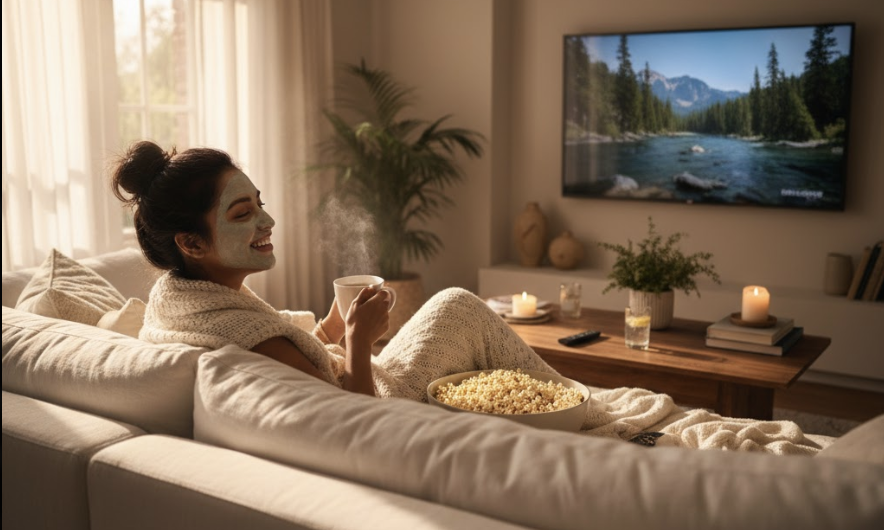

Join the 174K+ SoloAchievers™️ choosing peace in 2026 👇🏻
In 2026, the single life isn’t just accepted—it’s celebrated. As relationship dynamics shift and more people prioritize peace over chaos, being single has evolved from a temporary status to an intentional lifestyle choice that millions are embracing with confidence and joy.
To the bravest, most self-aware individuals choosing authenticity over societal pressure, this is your moment. Whether you’re newly single, happily solo, or simply taking time for yourself, you’re part of a cultural shift that’s redefining what it means to live a fulfilled life.
A Demographic Shift
Recent data shows singlehood may have peaked. According to Pew Research Center analysis of U.S. Census Bureau data released in January 2025, the share of unpartnered or self-partnered, U.S. adults actually declined from 44% in 2019 to 42% in 2023, marking the first decline in nearly two decades. “Singledom has peaked,” noted Dr. Richard Fry, the Pew researcher who conducted the analysis.
However, among young adults specifically, 86% of adults aged 18-24 remain unpartnered as of 2023, and substantial numbers of young men (63% of men under 30 according to 2022 data) report being single—though this varies significantly by gender and age.
Singles still represent over one-third of the U.S. adult population (approximately 33–42% depending on how “single” is defined), making them a significant demographic force and helping explain the rise of lifestyles like Ohitorisama, the Japanese concept of intentionally doing things alone.
10 Reasons Why Singles Can Thrive in 2026
1. Mental Health Takes Priority
The post-pandemic mental health awakening continues to shape relationship choices. Many singles report that avoiding incompatible relationships protects their mental well-being and reduces unnecessary stress. Research shows mixed results. Singles face different stressors than coupled people, not necessarily fewer overall.
When you choose peace over chaos, you’re choosing to protect your mental sanctuary rather than inviting unnecessary drama into your life.
2. Financial Reality Check: The Truth About Money and Marriage
Wealth Accumulation:
- Married couples under 35 have a median net worth 9.2 times higher than unmarried women and 3.1 times higher than unmarried men (U.S. Census Bureau, 2022 Survey of Income and Program Participation)
- Married couples aged 65+ have median net worth of $600,000 vs. $197,900 for single men and $184,000 for single women (U.S. Census Bureau via TheStreet, August 2025)
Financial Security:
- Only 29% of single adults consider themselves financially secure vs. 43% of married couples
- Singles earn on average $8,800 less annually than married folks
- 64% of single adults report doing “at least okay financially” compared to 77% of partnered adults
HOWEVER: Singles do have advantages:
- Full control over financial decisions without needing partner consensus
- No risk of partner’s debt affecting credit
- Ability to prioritize personal financial goals
- Greater flexibility in career choices and lifestyle spending
As Tori Dunlap, financial expert and founder of Her First $100K, puts it: “Being single means you’re the CEO of your own financial empire. Every dollar, every decision, every investment is yours to make.”
3. Career Advancement and Geographic Flexibility
International Relocation: Single professionals without children have significantly more flexibility for international career opportunities than married professionals. Research shows:
- The top reason employees decline international assignments is potential disruption to a partner’s career
- Dual-career couples face significant challenges coordinating relocations
- 69% of international companies expect spouse/partner career concerns to have greater impact on attracting candidates
4. The “Solo Travel” Boom and the Death of the Solo Tax
The travel industry has finally caught up to the solo economy. In 2026, traveling alone is no longer a niche hobby; it’s a massive market force.
- The Shift: Major cruise lines and tour operators are finally rolling back the “Single Supplement” (the solo tax), making it financially viable to explore the world without a partner.
- The Benefit: Solo travelers report higher levels of self-confidence and “decision-making joy.” When you travel solo, the itinerary is 100% yours—no compromises, no waiting for someone else to wake up, and no arguments over where to eat.
5. Intentional Community Over Insular Coupling
Being single doesn’t mean being alone. In fact, research suggests that single people are often more socially connected than their married counterparts.
- The “Greedy Marriage” Phenomenon: Sociologists have long noted that marriage can be “greedy,” pulling individuals away from friends and extended family.
- The Benefit: Singles are more likely to support their neighbors, visit siblings, and maintain deep, platonic friendships. In 2026, we are seeing the rise of “chosen families” and co-living spaces where community provides the emotional support traditionally expected from a spouse.
6. Physical Health and “The Glow Up”
While the “marriage protection” theory used to suggest married people were healthier, 2026 data shows that singles—especially those who are “Single by Choice”—are prioritizing fitness and sleep at record rates.
- Active Lifestyles: Studies show that single people often get more exercise than married people, who may fall into sedentary domestic routines.
- Sleep Hygiene: The “Sleep Divorce” trend among couples proves what singles already know: having the whole bed to yourself leads to better REM cycles and lower cortisol levels.
7. Mastery of the “Single-Income Finance” Skillset
While married couples may have a higher median net worth, singles are becoming more financially resilient by necessity.
- The Advantage: Living on a single income forces a level of financial literacy and “lifestyle design” that partnered people often overlook.
- Autonomy: As we discussed in your “Single Income Finance” archive, being the sole CFO of your life means your retirement strategy isn’t dependent on someone else’s career stability or spending habits.
8. The Rise of “Solo-Preneurship”
The 2026 economy favors the agile. Singles are uniquely positioned to take the “big risks” required for entrepreneurship.
- The Freedom to Pivot: Without the pressure of providing for a traditional nuclear family or consulting a partner on risk, singles are launching side hustles and startups at a faster rate.
- Professional Growth: This “Professional Agility” allows singles to chase high-growth opportunities that often require long hours or radical shifts in focus.
9. Curating a “Low-Drama” Digital and Physical Space
The “Peace Over Chaos” movement is a direct response to the “Relationship Burnout” of the early 2020s.
- Environmental Control: Your home is your sanctuary. For the intentional single, there is profound mental peace in maintaining a living space that is entirely reflective of their own taste, cleanliness standards, and energy.
- Digital Boundaries: Singles have total control over their digital diet, avoiding the “second-hand stress” that comes from a partner’s social media drama or workplace venting.
10. Radical Self-Discovery: Designing a Life That Actually Fits
The most powerful reason to stay single in 2026 is not freedom—it’s precision.
When you’re not constantly calibrating your choices around another person’s needs, moods, or timelines, something rare happens: clarity. You gain the mental and emotional bandwidth to do the deepest work there is—the work of becoming.
The Deep Work of the Self:
Single life removes the noise. No emotional outsourcing. No unconscious compromises. Just the uncomfortable, transformative question most people never slow down enough to ask:
Who am I when no one is watching—and what kind of life do I actually want?
The Main Event, Not the Intermission:
Single life is no longer a placeholder or a prelude. It is the main stage. This is the era of intentional design—where you map your values, energy, goals, and desires with the same seriousness others reserve for wedding planning.
Whether you use tools like GloType™ to architect your lifestyle and future, or simply reclaim the quiet power of an unclaimed Sunday morning, choosing yourself is no longer a detour from life.