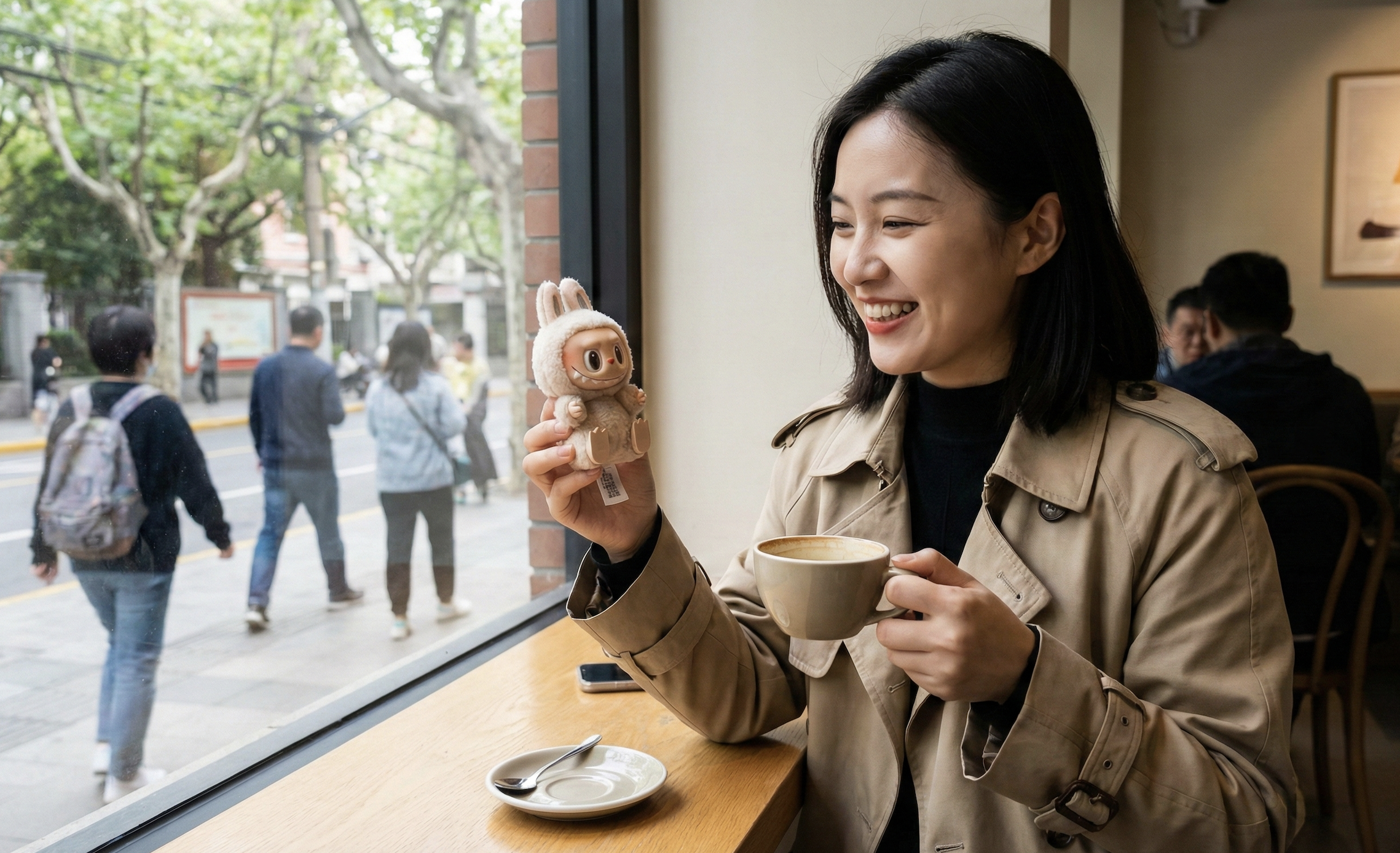

If you thought Treat Yo’ Self” marked the peak of self-care culture, think again. A new phrase is spreading across social media in China — and it perfectly captures the mood of modern single life: “Ai ni laoji.”
Ai ni laoji (simplified Chinese: 爱你老几) is a viral 2026 social media trend originating in China that translates to “love you, my dear self.” It represents a shift toward radical self-devotion and intentional spending among singles who prioritize personal well-being over traditional social milestones.
Roughly translating to “Love you, dear friend,” the phrase isn’t directed at a romantic partner or a best friend. Instead, it’s being tagged on receipts for spa days, solo meals, designer purchases, and collectible toys. The “dear friend” being spoiled is the buyer themselves.
Playful, ironic, and deeply self-aware, ai ni lao ji has become shorthand for choosing yourself — especially when traditional milestones feel increasingly out of reach.
More Than Retail Therapy
According to a recent report by TIME, this trend isn’t simply about consumerism. It’s a coping strategy shaped by economic reality.
Young adults in China are navigating a sluggish economy, high youth unemployment, rising living costs, and rapid urbanization. For many, the long-promised formula — work hard, get married, buy a home — no longer delivers stability or security.
Rather than waiting indefinitely for those benchmarks, many are rewriting the social contract. Self-care, in this context, isn’t indulgence. It’s resilience.
From Ohitorisama to Ai Ni Laoji: A Global Pattern Emerges. China isn’t alone in this shift.
In Japan, the concept of Ohitorisama — the practice of intentionally doing things alone, from dining out to traveling — has been mainstream for years. What began as a cultural acknowledgment of solo living has since evolved into a full ecosystem of single-friendly restaurants, hotels, and experiences.
Ai ni laoji reflects a similar mindset, but with a sharper emotional edge. Where Ohitorisama normalizes being alone in public, ai ni laoji actively celebrates self-devotion through private spending and everyday choices.
Together, these trends point to a broader global recalibration: singlehood is no longer framed as a waiting room for “real life,” but as a complete life in itself.
Redefining What a “Good Life” Looks Like
The rise of ai ni laoji reflects a broader generational shift toward what economists call the single economy — one driven by individuals prioritizing autonomy, emotional well-being, and small, tangible joys.
Consumer research expert Ashley Dudarenok describes this shift as a rational response to structural barriers.
“When traditional markers of success like marriage and homeownership become structurally inaccessible for many, young people are forced to redefine what a ‘good life’ means,” Dudarenok told TIME. “If they cannot afford a house, they can at least afford to treat themselves to a nice meal or a small collectible that brings joy.”
Rather than postponing happiness, young singles are localizing it.
Why This Resonates With the Global Single Community
From Ohitorisama in Japan to ai ni laoji in China, a shared truth emerges: single adults are building emotional and financial systems that don’t depend on partnership.
Yet many singles are still told that spending money on themselves is selfish, immature, or something they’ll “outgrow.” These movements flip that narrative entirely.
If you are your own primary provider, protector, and decision-maker, then caring for yourself isn’t frivolous — it’s foundational.
This isn’t about giving up on the future. It’s about refusing to put life on hold while waiting for conditions that may never arrive.
The Quiet Power of Choosing Yourself
In a world that still centers couples as the default unit of success, ai ni laoji offers something quietly radical: permission.
Permission to build joy into the present.
Permission to prioritize emotional sustainability.
Permission to treat singlehood not as a temporary gap, but as a valid and intentional way of living fully.
So the next time you book a solo trip, splurge on a hobby, or savor a quiet afternoon alone, don’t dismiss it as “treating yourself.”
Look in the mirror and say it instead:
Ai ni laoji.