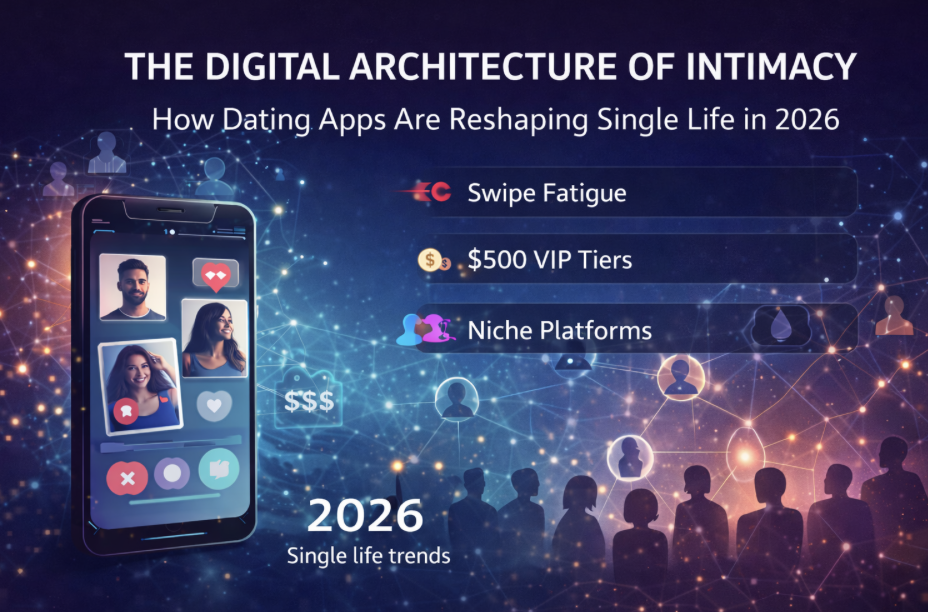
From swipe fatigue to $500 VIP tiers, the modern dating economy is forcing a rethink of how — and whether — we date at all.
In 2026, online dating is no longer a novelty, a convenience, or even a lifestyle choice. It is infrastructure. For millions of single adults, dating apps now function as the primary gateway to intimacy, connection, and partnership. But as the market matures, a growing number of users are questioning not just which app to use — but whether the system itself is working as intended.
The universal swipe model that once defined digital courtship has fractured into a highly segmented ecosystem of niche platforms, premium tiers, and identity-based communities. While this fragmentation promises greater alignment and intentionality, it has also introduced new forms of exhaustion, inequality, and cost. Dating app burnout, once framed as a personal failure, is increasingly understood as a predictable outcome of the market’s design.
This shift is not just a dating trend. It is a single life trend — one that reveals how people are adapting their expectations, behaviors, and boundaries in response to the architecture of modern intimacy.
The 2026 Inflection Point: From Scale to Segmentation
For more than a decade, scale was the defining advantage of dating apps. Success was measured in user volume, swipe velocity, and match counts. In 2026, that model is breaking down.
Today’s users are no longer satisfied with broad, location-based matching. Instead, they are gravitating toward platforms that pre-filter for lifestyle compatibility, values, and intent — whether that means sobriety, faith, ethical non-monogamy, neurodivergence, or serious long-term commitment. The market has responded with an explosion of specialized apps designed to serve smaller, more intentional pools.
At the same time, the definition of success has shifted. “Matches per day” has given way to “dates per month,” with a renewed emphasis on moving users offline quickly. This creates a paradox: apps that profit from engagement are now expected to help users disengage.
The result is a market caught between retention economics and user fatigue — and singles are feeling the strain.
Dating Apps as Infrastructure, Not Romance
To understand the current moment, it helps to stop thinking of dating apps as romantic tools and start thinking of them as behavioral environments.
Every platform encodes incentives: urgency timers, visibility boosts, scarcity mechanics, and paywalls. These features don’t just facilitate connection — they shape how users behave, how much emotional labor they expend, and how they interpret rejection or silence.
In high-volume environments, such as mass-market swipe apps, abundance often leads to decision paralysis and superficial engagement. In scarcity-based models, limited daily matches reduce cognitive load but can elevate pressure and pedestal dynamics. Timer-driven mechanics introduce artificial urgency, monetizing anxiety by charging users to undo expiration. Exclusive platforms gate visibility behind income, education, or status, creating a “velvet rope” version of romance.
Across the ecosystem, the message is consistent: attention is the commodity, and clarity comes at a premium.
The Limits of the Generalist Model
Despite ongoing dominance in market share, the largest dating platforms are increasingly constrained by their own scale.
High-volume apps remain effective for casual connections and rapid exposure, particularly among younger users. However, the same mechanics that enable scale — endless swiping, gamified feedback loops, algorithmic opacity — are also the primary drivers of burnout. The sheer volume of choice can reduce perceived value, encouraging users to collect matches rather than cultivate connection.
Attempts to correct these dynamics through premium features, such as prioritized likes or visibility boosts, have intensified stratification within the user base. The experience of dating is no longer uniform; it depends heavily on one’s willingness and ability to pay.
For many singles, the takeaway is not that dating has become harder — but that it has become more transactional.
Identity as the New Algorithm
One of the most significant shifts in the 2026 landscape is the rise of identity-first platforms. Rather than relying solely on algorithmic compatibility scores, these apps allow users to self-select into communities where key values are assumed rather than negotiated.
Faith-based dating apps continue to grow, offering alignment around non-negotiable spiritual frameworks. Cultural and ethnic platforms address shared language, family dynamics, and immigrant experiences that generalist apps often overlook. Neurodivergent and sobriety-focused platforms reduce the explanation burden that can make mainstream dating emotionally taxing. Ethical non-monogamy and kink-positive apps provide transparency around relationship structures that are still stigmatized elsewhere.
In each case, the appeal is not novelty but relief. By narrowing the field, these platforms lower emotional friction and increase the likelihood of meaningful engagement. For singles navigating increasingly complex social norms, identity alignment is replacing algorithmic promise.
The Velvet Rope Economy and the Price of Visibility
Perhaps the most controversial development in the dating market is the normalization of ultra-premium tiers. Monthly subscriptions now rival luxury gym memberships, while VIP options can reach hundreds of dollars per month.
These tiers do not necessarily improve compatibility. Instead, they improve visibility — placing certain users at the front of the line, unlocking access to the most popular profiles, or allowing messages to bypass mutual consent mechanisms.
The implications are significant. As visibility becomes monetized, dating begins to mirror broader economic inequalities. Access to opportunity is no longer just about location or effort, but about disposable income. Romance, once framed as universal, is increasingly tiered.
For single adults already balancing rising living costs, the question is no longer whether dating is worth the emotional energy — but whether it is worth the financial investment.
Innovation Through Exit: The Anti-App Movement
Alongside increased segmentation and monetization, a counter-trend is gaining momentum: tools designed to help people spend less time on dating apps, not more.
Event-driven platforms that activate only on specific days prioritize immediate offline interaction. Analog signals, such as wearable markers indicating single status, encourage real-world approaches without digital mediation. Voice- and video-first apps attempt to reduce look-based bias and accelerate chemistry assessment. Coaching-led platforms integrate guidance to help users break repetitive dating patterns.
These innovations share a common goal: reduce screen time, minimize ambiguity, and restore a sense of agency. In effect, technology is being used to facilitate an exit from technology.
The Cost of Love in 2026
Across categories, the economic model of dating has become increasingly granular. Free tiers are intentionally constrained, while paid features promise efficiency, relief, or reassurance. Likes are blurred, matches expire, and visibility is rationed.
For singles, this has transformed dating into a budgeting decision as much as an emotional one. The cumulative cost of subscriptions, boosts, and event tickets can rival other major lifestyle expenses — without any guarantee of outcome.
This financialization has prompted a broader reassessment: not just of which apps to use, but of how much of one’s life should be organized around them.
What This Means for Single Life
As the dating ecosystem grows more complex, single life itself is adapting.
Singles are becoming more strategic — treating dating apps as tools rather than destinations. Many are limiting platform use to specific seasons or goals, prioritizing quality over quantity, and investing more heavily in offline community, friendships, and personal fulfillment.
Rather than chasing constant optimization, there is a growing emphasis on alignment: choosing environments that reflect current values, energy, and intentions. In this context, dating is no longer the center of single life, but one component of a broader, self-directed lifestyle.
Navigating Fragmentation: From “Best App” to “Right App”
The era of the universal dating app is over. In its place is a fragmented, subscription-based ecosystem that rewards clarity, boundaries, and intentional participation. While technology will continue to shape how people meet, its influence is increasingly visible — and increasingly questioned.
For singles navigating this landscape, the most resilient strategy is not more swiping or higher tiers, but a stronger relationship with their own time, values, and sense of sufficiency. In a dating economy built on attention, the ability to step back may be the ultimate advantage.
In 2026, finding connection is less about casting a wide net — and more about choosing the right pond.
As the dating ecosystem fragments, one quiet but consequential shift is underway: the idea of a universal “best dating app” is disappearing. In its place is a more situational approach — one that recognizes that different seasons of single life call for different environments.
Rather than optimizing endlessly within a single platform, many singles are beginning to assess dating tools the way they assess other lifestyle choices: based on energy, intention, and alignment. Some emerging frameworks, such as Datēbase™, reflect this shift by treating dating apps not as rankings to be gamed, but as contexts to be matched — helping users identify which platforms are most compatible with their current goals, values, and emotional bandwidth.
In a market defined by abundance and fatigue, this kind of intentional selection may be less about finding more options, and more about reducing friction.