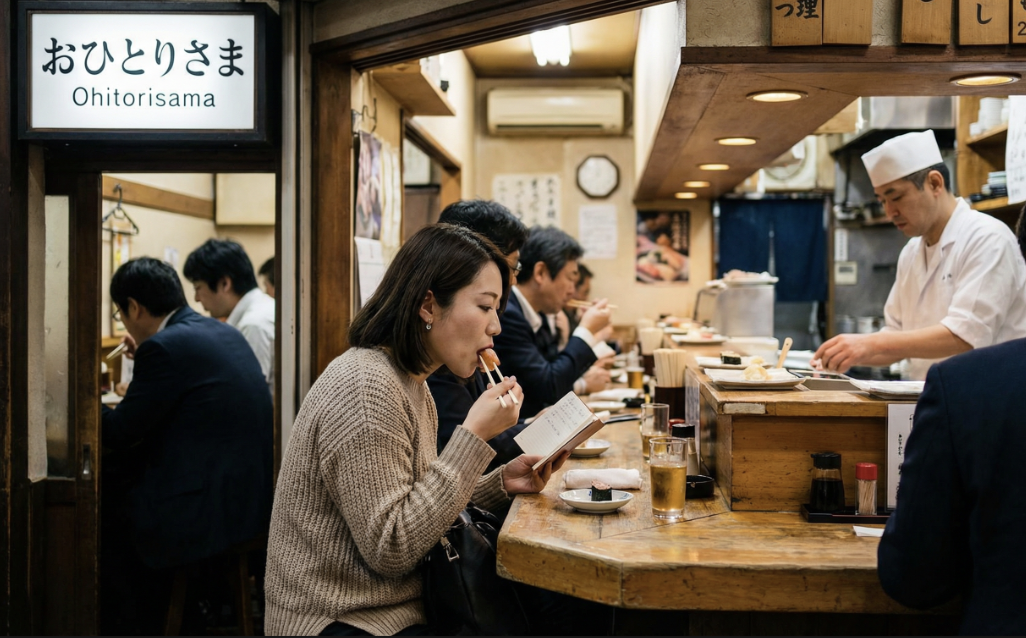

What Does Ohitorisama Mean?
Ohitorisama is a Japanese term describing people who enjoy doing activities alone by choice—such as dining, traveling, or attending events—as a form of independence and self-fulfillment.
The Age of Hushpitality: Why Ohitorisama is the Ultimate 2026 Trend
Are you actively seeking silence, booking a personal ‘me-kend’ getaway, or looking for experiences that truly immerse you without group noise? If so, you are part of the next evolution of intentional solitude.
The global embrace of Ohitorisama (お一人様)—the Japanese term for “party of one”—has moved past novelty and become a pillar of modern wellness. In 2026, the trend isn’t just about doing things alone; it’s about demanding a deeper, more personalized, and less distracting quality of time. This is the era of Hushpitality.
Hushpitality is a leading 2026 trend that describes travelers and consumers actively seeking environments that prioritize calm, control, and reduced noise. Solitude is the new luxury.
💡 How to Harness the 2026 Hushpitality Lifestyle
Embracing the Ohitorisama lifestyle in 2026 is about making deliberate choices that prioritize your well-being, control, and curiosity. Many people who embrace Ohitorisama also describe themselves as self-partnered, prioritizing independence and self-fulfillment. Many of these self-love habits reflect the broader benefits of staying single, including autonomy, flexibility, and personal growth.
The 2026 Evolution: From Solo Dates to Intentional Silence
While the solo date remains popular, the underlying motivation has sharpened, driven by digital fatigue and a deep-seated desire for mental restoration.
| 2025 Trend Focus | 2026 Trend |
| Solo Date | Mindful Me-Kend (Short, purpose-driven solo weekend trips) |
| Self-Care | Hushpitality (Seeking silence in travel/dining/activities) |
| Independence | Hyper-Personalization (Customizing trips/experiences entirely with AI tools) |
| Solo Travel | Active Solo Adventure (Hiking, cultural immersion, literary-themed trips) |
The Key Drivers of the 2026 Ohitorisama Movement
- Seeking Sweet Silence: After years of digital saturation, consumers are treating silence as a commodity. This manifests as demand for silent retreats, tech-free zones, and hotel amenities designed for deep rest and minimal distraction (the essence of Hushpitality).
- The Power of ‘Me-Kends’: Short, affordable, and highly focused solo getaways are surging. These “me-kends” are planned around a specific passion—a book-themed escape, a cooking class, or a deep dive into nature.
- Hyper-Personalized Planning: The solo traveler is taking full control. AI-driven tools are used not just for booking, but for crafting bespoke itineraries that exactly match personal preferences, fitness levels, and passions, making the journey truly ‘you-shaped’.
- Active Cultural Immersion: Solo travel is increasingly moving toward off-the-beaten-path destinations and active, culturally rich experiences (like small-group cycling or trekking tours). Solo doesn’t mean alone—it often means joining a small group of like-minded strangers to share a deep experience without the baggage of pre-existing social dynamics.
1. Choose Your Environment Intentionally
- Opt for Hushpitality: When dining, look for restaurants offering counter-seating or private booths designed to facilitate focus. When booking travel, filter for features like “quiet floor,” “library,” or “mountain view” to secure your desired sanctuary.
- Schedule a Digital Reset: The deepest form of solitude is unplugged. Schedule regular digital detoxes—even if it’s just one tech-free evening per week—to reconnect with your physical environment.
2. Travel with Purpose
- The Passion Pursuit Trip: Center your next solo adventure around a hobby. Consider a literary-inspired journey, a ceramic workshop, or a trek—solo travelers are leading the demand for active, meaningful trips that blend physical challenge with cultural depth.
- Blend Solo and Social: Recognize that Ohitorisama is a mindset of independence, not isolation. If you want company for part of a trip, look into small-group adventure tours designed specifically for solo travelers who want to connect over a shared, challenging experience.
3. Maximize Your Mental Return
- Embrace the 5-to-9 Mindset: If you are traveling for business, wake up an hour earlier (the 5-to-9) to dedicate time to a personal goal—journaling, exercise, or quiet reading—before your work commitments begin.
- Go Deep, Not Wide: In a world of infinite options, use your solo time to go deep on a subject. Spend the entire afternoon at one museum, reading every plaque, or dedicate your solo date to mastering a single new recipe. This intense focus is the antidote to digital distraction.
Ohitorisama is no longer just a trend of independence; it is a movement of intentionality, control, and well-being. By seeking out Hushpitality and curating your own high-value solo time, you are actively participating in the defining self-care trend of 2026.
Why is ohitorisama on the rise in Japan?
However, Japan’s demographics are changing rapidly. The country has one of the lowest birth rates and highest life expectancies in the world, resulting in an aging and shrinking population. The number of single households has increased dramatically, reaching 21.2 million in 20201. More people are choosing to delay or forego marriage and parenthood, opting for careers, hobbies, or personal growth instead.
These changes have created a new, affluent, and diverse clientele for businesses: the single consumer. In response, many industries have adapted to cater to the needs and preferences of the ohitorisama market. For example, restaurants have introduced single seats, booths, or counters for solo diners. Hotels have offered smaller rooms, discounts, or amenities for solo travelers. Bookstores, cinemas, karaoke bars, and theme parks have also welcomed and encouraged solo customers.
How can Americans adopt the ohitorisama lifestyle?
While ohitorisama is a Japanese phenomenon, it is not exclusive to Japan. In fact, many Americans may already practice some form of ohitorisama, whether they realize it or not. According to a 2019 survey by YouGov, 32% of Americans said they enjoy going to a restaurant alone, 25% said they enjoy going to a movie theater alone, and 22% said they enjoy traveling alone2.
However, there may still be some stigma or hesitation around doing things alone in American culture, especially among younger generations who are more influenced by social media and peer pressure. Some people may feel insecure, anxious, or bored when they are alone, or they may worry about what others will think of them.
If you are one of those people, here are some tips on how to adopt the ohitorisama lifestyle and enjoy doing things alone:
- Start small. You don’t have to go on a solo trip around the world or eat at a fancy restaurant by yourself right away. You can begin with something simple and familiar, such as going to a coffee shop, a park, or a museum alone. See how it feels and what you notice when you are alone.
- Be prepared. Before you go out alone, make sure you have everything you need to make your experience comfortable and enjoyable. For example, you may want to bring a book, a journal, a camera, or headphones to keep yourself entertained or inspired. You may also want to research the place you are going to, check the reviews, make a reservation, or plan your route to avoid any surprises or hassles.
- Be confident. Don’t let the fear of judgment or rejection stop you from doing things alone. Remember that you are not alone in being alone. There are many other people who are doing the same thing, and they are not weird, sad, or lonely. They are just ohitorisama, and so are you. You have the right to do what you want, when you want, and how you want, without needing anyone else’s approval or company.
- Be open. Doing things alone can be a great opportunity to discover new things, meet new people, or learn more about yourself. Don’t be afraid to try something new, talk to a stranger, or challenge yourself. You may find that doing things alone can be more fun, rewarding, and meaningful than doing things with others.
Benefits of doing things alone
Doing things alone can have many benefits for your mental health, well-being, and personal growth. Here are some of the advantages of spending time by yourself and doing activities on your own:
- You can build your confidence. Taking the reins to complete tasks independently can tremendously impact your self-assurance1. You can learn new skills, overcome challenges, and discover your strengths without relying on others.
- You can be more focused and productive. When you are alone, you have fewer distractions and interruptions from other people. You can concentrate on your work, hobbies, or goals without being influenced or pressured by others’ opinions or expectations2.
- You can recharge and relax. Being alone can be a welcome break from the stress and noise of everyday life. You can enjoy some quiet moments where you can just be. You can also indulge in activities that make you happy, such as reading, meditating, or taking a bath3.
- You can boost your creativity. Solitude can spark your imagination and inspire new ideas. You can explore your thoughts, feelings, and interests without being limited by social norms or conventions. You can also experiment with different forms of expression, such as writing, painting, or music2.
- You can move at your own pace. When you do things alone, you have the freedom to choose what, when, and how you want to do them. You don’t have to compromise, negotiate, or wait for others. You can set your own schedule, pace, and standards2.
- You can enjoy your own company. Being alone can help you develop a better relationship with yourself. You can learn more about your personality, preferences, and values. You can also appreciate your own qualities, achievements, and uniqueness4.
- You can grow as a person. Being alone can offer you opportunities for self-improvement and personal development. You can reflect on your life, goals, and choices. You can also challenge yourself to step out of your comfort zone and try new things2.
Ohitorisama is a trend that reflects a changing society and a changing mindset. It is a way of celebrating one’s individuality, autonomy, and happiness, without depending on others. It is a way of living that can benefit anyone, regardless of their culture, age, or marital status.
How to Practice the Ohitorisama Lifestyle
If you are interested in trying the ohitorisama lifestyle, why not start today? Pick something you want to do, and do it alone. You may be surprised by how much you enjoy it. Start small — visit a café, take a walk through a museum, or spend an afternoon exploring a neighborhood by yourself. Many people discover that doing things alone allows them to slow down, notice more, and connect more deeply with their own interests. Over time, these small solo experiences can build confidence, independence, and a stronger sense of personal freedom.
Ohitorisama FAQs:
Ohitorisama is a Japanese term describing people who enjoy doing activities alone by choice—such as dining, traveling, or attending events. It reflects a lifestyle centered on independence, personal comfort, and self-directed experiences.
No. Ohitorisama is about intentional independence, not isolation. People who embrace this lifestyle actively choose to enjoy their own company and pursue activities alone as a form of personal freedom and self-fulfillment.
Ohitorisama became popular as Japanese cities adapted to more people living alone. Restaurants, travel services, and entertainment options began catering to solo customers, making independent activities socially normal and widely accepted.
The ideas are related but slightly different. Ohitorisama focuses on enjoying activities alone, while being self-partnered emphasizes choosing yourself as your primary life partner and prioritizing personal growth and independence.
Common Ohitorisama activities include dining alone, traveling solo, going to concerts or movies independently, and spending weekends focused on personal interests. The key idea is enjoying experiences without needing a companion.