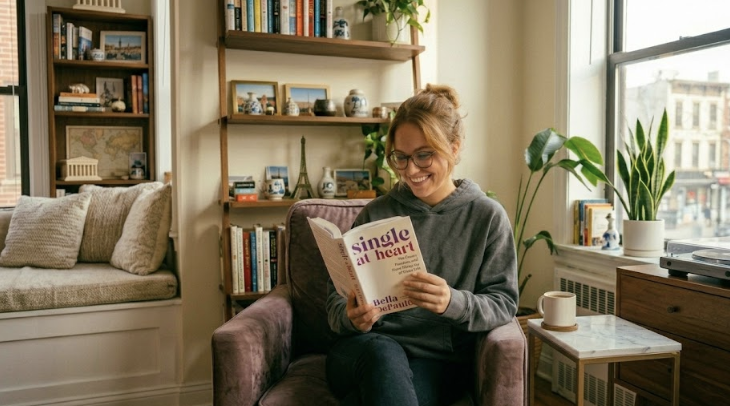
Self-partnered means choosing to be your own primary partner—emotionally, socially, and financially—while being single is simply a relationship status. The term “self-partnered” gained global attention after Emma Watson used it to describe her approach to independence and relationships. To fully understand the concept, see our guide to self-partnered meaning.
As we move through 2026, the language of independence is evolving. While “single” has traditionally described anyone not in a relationship, a new identity is gaining traction: being self-partnered.
For many people, this shift isn’t just semantic — it’s a complete reframing of how we think about independence, relationships, and personal fulfillment.
Self-partnered vs single: what’s the difference?
- Single: Not in a relationship (a status)
- Self-partnered: Choosing yourself as your primary partner (an identity)
- Dating yourself: The actions and habits that build that identity
Being single describes your relationship status. Being self-partnered describes how you experience your life.
Why the shift is happening in 2026
1. The “dating recession” and the rise of choice
Recent trends point to a clear shift: fewer people are actively dating, and more are choosing independence. This isn’t about giving up on relationships — it’s about raising standards and prioritizing alignment over availability.
A growing number of people now identify as “single by choice,” rejecting the idea that singlehood is just a waiting period.
2. Redefining what it means to be single
For years, being single was often framed as something temporary — a phase before a relationship.
That narrative is changing.
- Single (old framing): Waiting, searching, or “in between”
- Self-partnered (new framing): Intentional, fulfilled, and self-directed
Being self-partnered removes the idea that something is missing — and replaces it with the idea that you are already complete.
3. The rise of the self-partnered lifestyle
The shift toward being self-partnered reflects broader lifestyle changes:
- Greater financial independence
- More focus on personal growth and well-being
- Increased comfort with solitude and autonomy
Concepts like “solo living” and independent travel are no longer niche — they are becoming mainstream expressions of a self-partnered life.
4. Why the label matters
The difference between being single and being self-partnered is ultimately about ownership.
When you identify as self-partnered, you are:
- Choosing yourself intentionally
- Defining your life on your own terms
- Building fulfillment without dependency
It’s the difference between passively being alone and actively creating a life you enjoy.
Key takeaway
Single is a status. Choosing to be single, is a power move.
Being self-partnered is a mindset.
One describes your relationship situation.
The other defines how you show up in your life.
Final thought
If you’ve ever felt like “single” didn’t fully capture your experience, you’re not alone.
The shift toward being self-partnered reflects a broader cultural change — one where independence is not a fallback, but a deliberate and empowered choice.