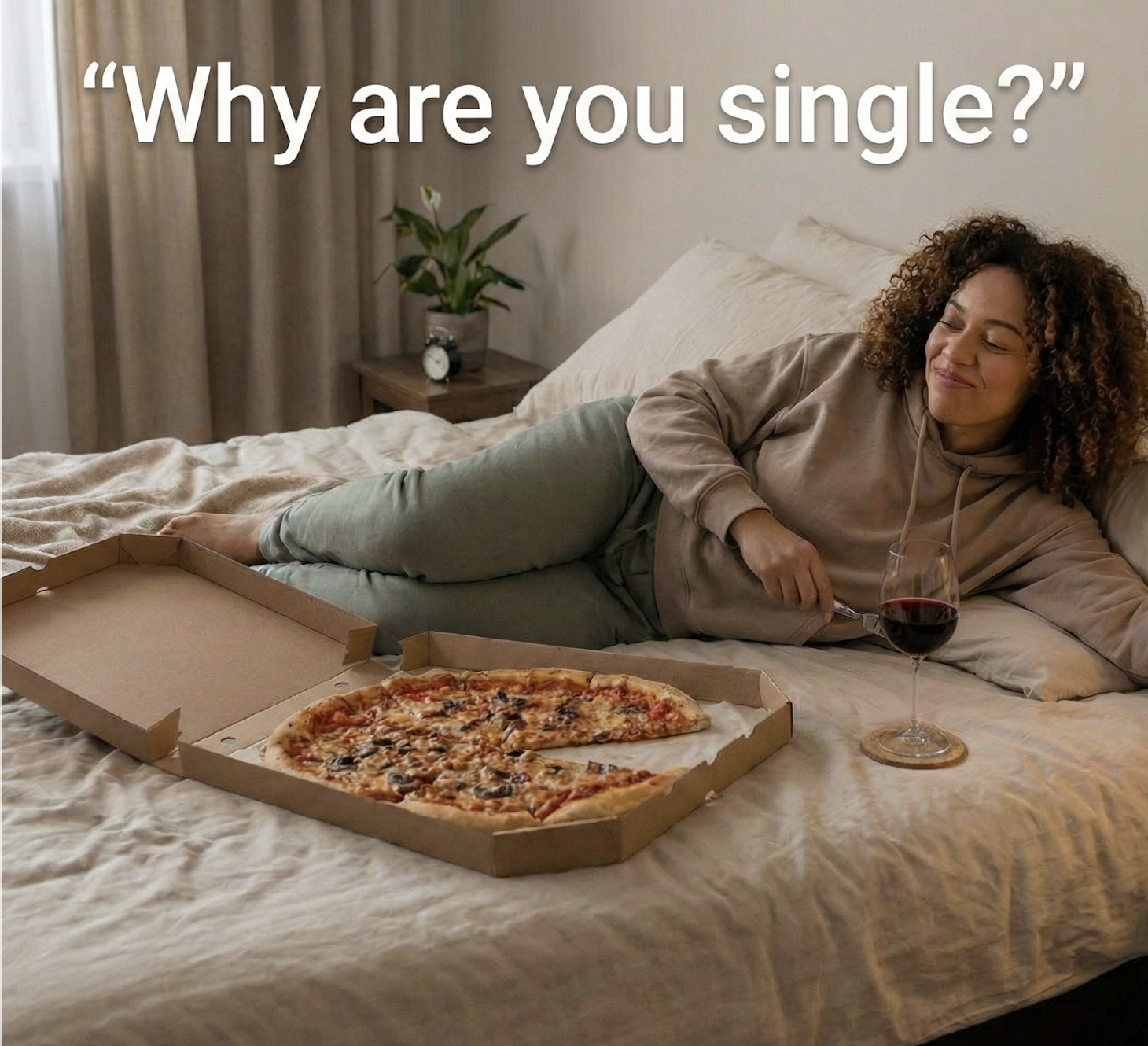

As the calendar advances into 2026, a cultural note is being struck — not in the crescendo of romantic partnership, but in the steady, understated rhythm of solo existence. The narrative of being single is no longer merely an interlude before coupling; it’s emerging as a full movement in its own right, replete with nuance, purpose, and autonomy.
A Shift in Tempo
For decades, societal rhythms—especially in Western contexts—chimed to the beat of coupling: meeting, dating, marrying, building a life together. But that beat is loosening. The phenomenon of lifelong or extended singlehood is no longer a statistical quirk but a growing mainstream pattern. Research by Pew Research Center and others finds that more adults are unmarried than ever. ABC
Meanwhile, observations of cultural change note that people are increasingly choosing to stay single, or at least delaying partnership, not out of resignation but often out of choice. Newsweek
What this means: 2026 is witnessing a new solo movement—a rearrangement of priorities, from external companionship to internal company, from obligation to exploration, from an “unfinished” status to a full-fledged lifestyle.
The Layers of Singlehood Redefined
1. Autonomy as a Creative Space
Single life increasingly becomes a zone of self-crafting, where one experiments with identity, work, travel and friendships on their own terms. Studies show that single individuals often invest more in self-development, personal values of freedom and creativity, and social networks that aren’t partner-based. Phys.org+1
2. Friendship, Community & Connection Reimagined
Being single doesn’t imply being alone. The meaning of connection is shifting—less about romantic coupling and more about meaningful relationships with friends, peers, communities. One article puts it this way: the feeling that is often mis-attributed to “needing a partner” might in fact be simply craving connection. Newsweek
3. Letting Go of the “Deficit” Narrative
Historically, singlehood carried a deficit framing: “missing out on love,” “incomplete without a partner.” But current research overturns this, arguing that singles can live meaningful, psychologically rich lives because they are single—not merely in spite of it. Psychology Today+1
4. The Economic and Social Reality
Large numbers now live solo, and the “chronically single” are not anomalies but fast-growing cohorts. In the U.S., adults who have never been married make up a large share of the non-married population. Psychology Today And certainly for women especially, the abandonment of partnership as a primary life goal is gaining traction. Newsweek
This isn’t just a personal choice—it’s a demographic and cultural shift.
Why 2026 Feels Different
- Generational values: Younger cohorts show less inclination toward marriage as essential for fulfillment. The Wall Street Journal+1
- Economic/structural shifts: Rising cost of living, career complexity, urbanization—these make single living a viable and sometimes preferable path.
- Technological & social landscape: Apps, social media, flexible work create new modes of socializing and living beyond traditional coupledom.
- Cultural reframing: Singlehood is being spoken about not as a default or “waiting mode,” but as a valid, even vibrant, identity.
The Unsung Symphony
What does this solo movement actually sound like? Imagine this:
- The solo artist, not waiting backstage for a duet, but taking the spotlight and composing their own piece.
- The freedom to walk off-script, pause the performance, improvise.
- The encore isn’t a wedding march—it might be a solo road trip, a deep friendship, a project, a bold career move.
- The accompaniment isn’t a partner’s echo but a supportive ensemble: chosen friends, community, self-care rituals.
- The refrain isn’t “when I find my person” but “how I find my personhood.”
For the Chronically Single: A Few Notes to Hold On To
- Recognize that singlehood has potential, not only in future coupling but in the present moment. Thinking of it as “in between relationships” limits the richness of now.
- Invest in you: cultivate self-understanding, passions, friendships. Research shows that singles who value freedom, fun and creativity report higher life-satisfaction. Phys.org
- Be intentional about community and connection. Single living doesn’t mean solo in all dimensions.
- Reframe the internal narrative. If you’ve internalized that “being single = missing out,” explore the alternative: “being single = choosing my trajectory.”
- Try to let go of the “should” of conformity. The 2026 solo journey is about rewriting the script.
In 2026, the “chronically single” are becoming anything but invisible. They’re composing their own score—sometimes soft and introspective, other times bold and improvisational. This isn’t solitude as shorthand for loneliness; it’s a symphony of self-discovery, agency, community, and redefined accompaniment.
For further reading on the rise of this solo trend, check out this recent article from Newsweek on how women are increasingly choosing the single life: Women Are Choosing the Single Life