
In 2024, the Tokyo Metropolitan Government introduced an official matchmaking app aimed at supporting marriage formation amid Japan’s longstanding demographic challenges. This initiative reflects governmental efforts to explore non-traditional policy tools in response to population decline and falling fertility rates. MERXWIRE NEWS
Unlike commercial dating platforms, the app incorporated elements such as user verification, signaling an emphasis on serious partnership formation rather than casual social matching. Early reporting suggests the app has generated engagement and relationships, but there is no comprehensive public dataset on nationwide impact or demographic reversal attributable to the platform.
Japan’s Demographic Landscape: Fertility and Households
Fertility and Birth Trends
Japan’s fertility rate has been at historic lows for decades, and provisional demographic data continue to underscore structural decline.
- National TFR figures show fertility rates well below the replacement level of 2.1. Wikipedia
- Tokyo’s own fertility rate dipped below 1.00 in recent demographic data, among the lowest in the country. Wikipedia
Japan’s total number of births and the natural population decrease have continued to grow, illustrating the scale of population aging and decline.
Solo and Single Households: Growth and Social Trends
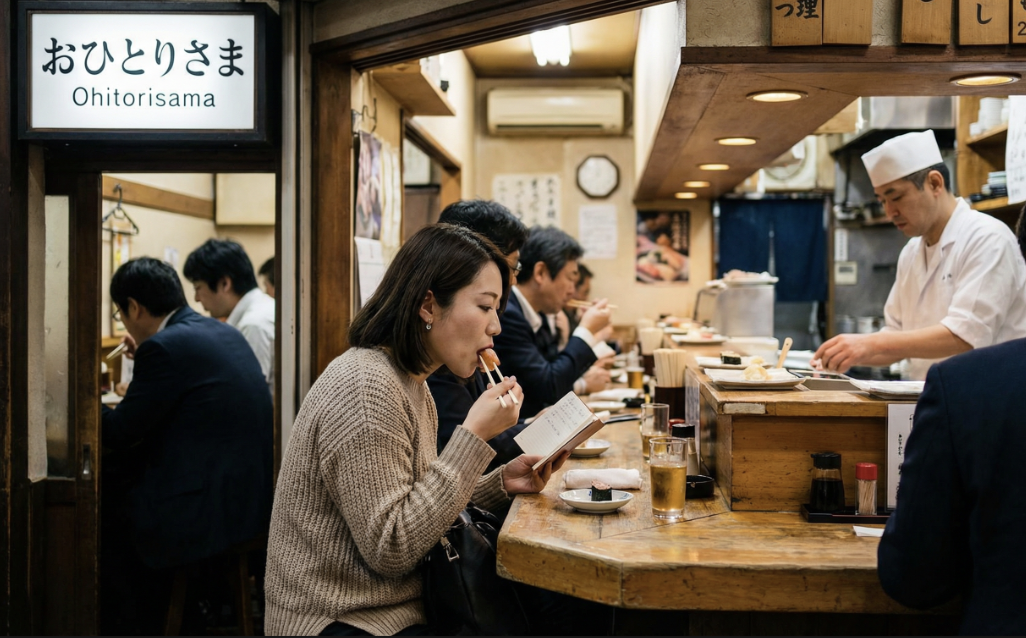
Rising Prevalence of Single-Person Households
Recent official survey data show structural change in household composition:
- In 2023, 34% of all Japanese households were single-person households, the largest category nationally.
This trend reflects both demographic aging and younger households delaying marriage or choosing single living.
Unmarried Population and Life Choices
Long-term trends in lifelong unmarried rates (生涯未婚率) indicate continued increases among adults:
- The proportion of people who have never married by age 50 has been rising, according to national research institutions. Ministry of Finance Japan
Other social research points to a broadening of lifestyle preferences that include non-marriage options and “solo living” as socially legitimate outcomes. National Institute of Population and Social Security Research (IPSS) conducts detailed demographic projections and lifetime marriage statistics .
Economic and Social Drivers of Solo Living
Marriage Timing and Economic Factors
Japan’s average ages at first marriage have risen over decades, reflecting broader economic and social shifts:
- Historical demographic statistics show first marriage ages above 30 for men and near 30 for women in recent decades.
Economic considerations such as housing costs, job stability, and income expectations contribute to both delayed marriage and solo household formation.
Social Norms and Relationship Patterns
Independent surveys and media reporting highlight evolving attitudes toward relationships among younger generations. Polling suggests that a substantial proportion of young adults report never having been in a steady relationship, reflecting complex social factors beyond formal marriage rates.
Policy Responses Beyond Matchmaking
Government Strategy Shift
Rather than framing singlehood as inherently problematic, policymakers at municipal and national levels are increasingly discussing holistic support structures:
- Housing policies tailored for single and aging residents
- Expanded community resources
- Social safety nets that do not hinge on nuclear family units
These developments align with commentary from demographic experts describing a shift from marriage-centric policy to inclusive social infrastructure design.
While detailed policy releases vary by jurisdiction, academic and government research emphasize the need for new frameworks around aging, living alone, and population support.
Reframing the Matchmaking App
Rather than a standalone fix for demographic decline, Tokyo’s matchmaking initiative is now widely viewed within policy circles as one element within a broader portfolio focused on life quality, social connection, and community support.
Imagining Japan’s Solo-First Future
Japan’s experience underscores that solo living is not merely a transitional phase, but a structural reality shaped by long-term economic, social, and cultural forces.
Moving forward, successful adaptation will likely involve:
- Expanding support systems for individuals of all ages
- Designing urban living environments that blend autonomy with community
- Reframing family, partnership, and care beyond traditional household models