
Solo Dining Guide: How to Eat Out Alone With Confidence (Plus City Guides)
Solo dining is the skill of enjoying restaurants alone—on purpose. This guide gives you an easy framework to choose the right spot, time, and seat, plus city mini-guides for NYC, San Francisco, Tokyo, Paris, and Barcelona.
Quick take: The best solo dining experiences are bar seats, counter service, or small bistros during off-peak hours. You’re not “eating alone.” You’re eating unrushed.
- Best seat: bar/counter (easy, social-optional)
- Best time: weekday lunch or early dinner
- Best order: house specialty + one drink/dessert (keep it simple)
On this page:
- What solo dining is (and why it’s a lifestyle flex)
- The Solo Dining Framework (5 steps)
- Where to sit when you’re dining alone
- What to order (low-decision, high-reward)
- City guides: NYC, SF, Tokyo, Paris, Barcelona
- Solo dining etiquette (quiet confidence)
- FAQ
What solo dining is (and why it works)
Solo dining means eating at a restaurant by yourself—without treating it like a placeholder for “real plans.” It’s a lifestyle skill: you can travel, celebrate, decompress, or simply feed yourself well without waiting for company.
Signals a place is solo-friendly
- Bar seating: you can sit immediately, order easily, and feel “placed.”
- Counter culture: ramen, sushi, tapas bars, wine bars, diners.
- Fast-to-settle menus: a few house specialties (less decision fatigue).
- Good lighting + reasonable noise: comfortable to read, people-watch, or just be.
The Solo Dining Framework (5 steps)
This is the simplest way to plan solo dining anywhere—without overthinking.
Step 1: Choose the format
Pick a place designed for one: bar seating, counter service, or a small bistro. Formats that “expect” solo guests feel effortless.
Step 2: Choose the timing
Go when the room is calm: weekday lunch, early dinner, or late-night counters. You’ll get better service and more seat options.
Step 3: Choose the seat
If there’s a bar/counter, take it. If not, ask for a small table near the action (not isolated in a corner unless that’s your preference).
Step 4: Order the house specialty
Reduce decision fatigue: order what they’re known for, plus one “nice” extra (a drink, dessert, or starter).
Step 5: Decide your vibe
You get to choose: reading, scrolling, journaling, people-watching, or simply being present. Solo dining is flexible—not performative.
Where to sit when you’re dining alone
The bar (best default)
- Fast seating and easy ordering
- Social-optional (chat if you want, quiet if you don’t)
- Ideal for one course or a full meal
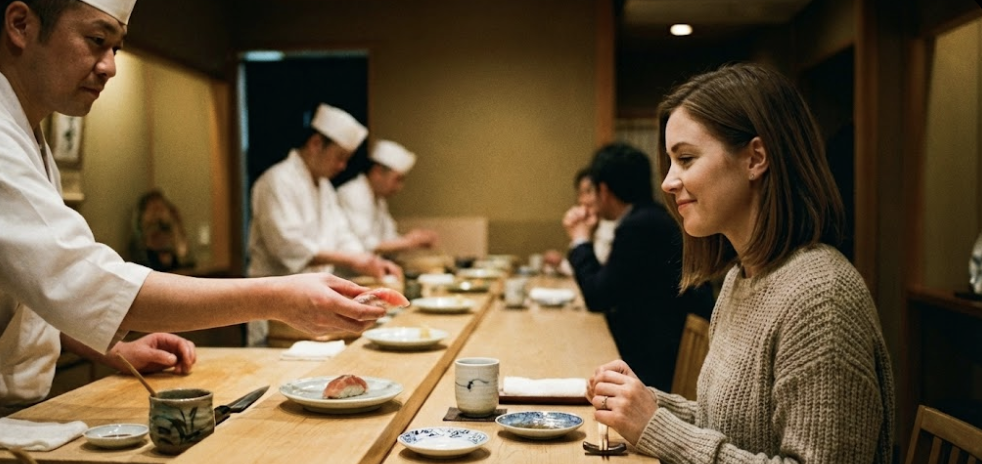
The counter (most comfortable)
- Feels normal in ramen/sushi/tapas cities
- Great for people-watching
- Often the best service/view in the house
A small table (when you want space)
- Best for a slower meal or workday decompression
- Ask for a two-top instead of a large table
- Choose a seat that feels “in” the room, not hidden
A chef’s counter (when you want an experience)
- Perfect for tasting menus designed around a counter
- High trust: let the kitchen lead
- Great for celebrations “for one”
What to order (low-decision, high-reward)
Solo dining gets easier when you remove the “what should I do?” question. Use one of these templates:
- Signature + treat: house specialty + dessert
- Bar menu: 2 small plates + one drink (or zero-alcohol option)
- Counter classic: ramen/sushi/tacos + a simple side
- Celebration: tasting menu at a counter or a great bistro entrée + a glass of something nice
City guides: top solo dining cities
These cities consistently make solo dining feel normal, comfortable, and genuinely fun. Each mini-guide below focuses on where solo dining shines, what to look for, and how to do it well.
New York City Solo Dining Guide
Why it’s great for solo dining: density, anonymity, and incredible bar seating. You can walk in, sit down, and feel instantly “normal.”
- Best formats: wine bars, sushi counters, bistros with bar seats, diners
- Best timing: weekday lunch, early dinner, late-night counters
- Look for: a lively bar, short menu, quick seat turnover
Solo move: sit at the bar, order the signature, and let the city happen around you.
San Francisco
Why it’s great for solo dining: thoughtful service, chef-driven counters, and a strong “casual excellence” culture.
- Best formats: counter tasting menus, bakeries/cafés, neighborhood wine bars
- Best timing: weekday lunch and early dinner
- Look for: counter seating and small-room restaurants
Solo move: go early, sit at the counter, and make it a ritual.
Tokyo
Why it’s great for solo dining: it’s culturally normal. Many restaurants are literally designed for one—especially ramen, sushi, and specialty counters.
- Best formats: ramen shops, sushi counters, tonkatsu/udon specialists
- Best timing: anytime—solo is built in
- Look for: counters, ticket machines, small focused menus
Solo move: order the classic, eat with intention, then continue your day like it’s the most normal thing in the world.
Paris
Why it’s great for solo dining: café culture and long, unhurried meals. Alone feels elegant here, especially at a terrace or bar.
- Best formats: bistros, cafés, wine bars, pastry stops
- Best timing: lunch and early evening aperitif hours
- Look for: terraces and places where people linger
Solo move: choose a terrace seat, order simply, and stay as long as you like.
Barcelona
Why it’s great for solo dining: tapas culture is naturally flexible. Standing bars and small plates make one-person dining feel built-in, not awkward.
- Best formats: tapas bars, seafood counters, vermouth spots
- Best timing: early tapas, late dinner (choose your vibe)
- Look for: standing room, counters, quick-turn kitchens
Solo move: order one thing at a time and let the meal unfold.
Solo dining etiquette (quiet confidence)
- Ask for what you want: “A seat at the bar for one, please.” Simple and normal.
- Tip like you belong: solo diners are not “less valuable.” You’re a full guest.
- Phone or book is fine: the goal is comfort, not performance.
- Slow is allowed: if you want to linger, choose a café/bistro/terrace format.
- Celebrate alone on purpose: birthdays, promotions, or “I made it through the week” dinners count.
FAQ: Solo dining
Is it awkward to eat alone at a restaurant?
It usually feels awkward only in your head. In practice, restaurants seat solo guests constantly—especially at bars and counters. Choose a solo-friendly format and you’ll feel comfortable within minutes.
What’s the best seat for solo dining?
The bar or counter is the easiest default. It’s efficient, social-optional, and designed for single guests. If you want privacy, ask for a small two-top.
What should I do while solo dining?
Anything that makes you feel relaxed: people-watch, read, journal, scroll, or simply enjoy the meal. The point is to be unrushed, not to “look busy.”
What time is best for eating alone?
Weekday lunch and early dinner are the smoothest. You’ll get easier seating, calmer rooms, and more attentive service.
Which cities are best for solo dining?
NYC, San Francisco, Tokyo, Paris, and Barcelona are consistently great because they have strong bar/counter culture, flexible dining formats, and a “solo is normal” vibe.